
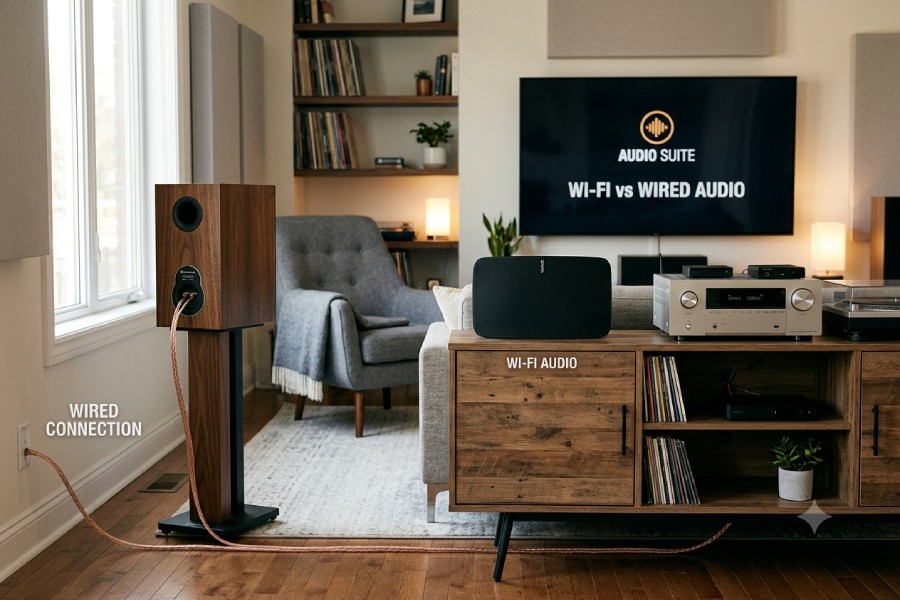
Introduction
Audio technology has evolved rapidly over the past decade. Where high-fidelity sound once meant running thick cables through walls and setting up bulky receiver stacks, modern streaming tech has transformed how we listen to music and movies. Today, audio lovers face a major choice when designing their ideal listening environment: should you build around a wi fi audio system or stick with traditional wired connections?
If you are planning a home theater sound system setup, deciding between network-based streaming and physical cabling is easily the most important decision you will make. Both paths offer distinct benefits, but they also come with clear tradeoffs in audio fidelity, installation effort, budget, and long-term convenience.
In this detailed guide, we will unpack the mechanics of Wi-Fi and wired audio, evaluate sound performance under real-world conditions, and help you select the exact setup that fits your lifestyle and budget.
Understanding the Core Difference
To appreciate how these two approaches differ, it helps to understand how audio signals travel from your source device to your speakers.
Wired Audio: The Direct Analog/Digital Highway
Wired sound relies on physical conductors. This usually means copper speaker wire carrying an amplified analog signal, or digital cables like HDMI eARC, optical (Toslink), or coaxial lines carrying bits directly to a Digital-to-Analog Converter (DAC) and amplifier.
Because the signal moves through a physical medium, it is completely immune to network congestion, bandwidth caps, or radio frequency interference from neighboring devices.
Wi-Fi Audio: High-Bandwidth Wireless Networking
Unlike Bluetooth, which compresses audio data heavily to fit narrow bandwidth limits, Wi-Fi audio sends uncompressed or losslessly compressed audio packets across your local area network (LAN).
Because modern network routers offer massive bandwidth compared to Bluetooth, network-based audio can easily transfer high-resolution formats like 24-bit/192kHz PCM or multi-channel audio tracks. Each speaker or streaming node contains its own internal network card, DAC, and amplifier to unpack and play the incoming digital stream.
Sound Quality & High-Resolution Support
For audiophiles and movie enthusiasts, sound fidelity is usually the top priority. How do wireless networks compare to traditional physical cables in pure audio performance?
High-Resolution Audio Streaming
Wi-Fi networks comfortably handle high-resolution lossless audio. Platforms like Apple Music, Tidal, and Qobuz offer tracks recorded at sample rates up to 24-bit/192kHz. Wi-Fi networks stream these massive data files without squeezing or degrading the dynamic range.
Wired setups using high-quality external DACs and HDMI eARC connections also support uncompressed hi-res audio, including object-based surround sound formats like Dolby Atmos and DTS:X.
Signal Integrity and Distortion
With a wired connection, signal quality depends on cable gauge, shielding, and the quality of your amplifier and speakers. Once you use proper copper wire over reasonable distances, signal loss is essentially zero.
With Wi-Fi audio, the digital signal arrives bit-perfect at the receiver or active speaker. The ultimate sound quality then depends on the built-in DAC and amplifier inside that specific wireless speaker. High-end Wi-Fi audio components match the quality of traditional mid-to-high-tier separate components, though traditional wired separates still hold the edge in extreme high-end audiophile applications.
Reliability, Latency, and Stability
While sound quality can be remarkably close between top-tier options in both categories, operational performance often reveals stark differences.
Transmission Latency
Latency is the tiny time delay between an audio signal leaving the source and reaching your ears.
- Wired Audio: Operates with near-zero latency (under 1 millisecond). This makes wired connections essential for live gaming, musical performance, and precision home theater sync.
- Wi-Fi Audio: Introduces a small amount of buffer latency (typically 20 to 100 milliseconds) to prevent audio drops over the network. Modern multi-room ecosystems use smart sync algorithms to keep music perfectly aligned across multiple rooms, but high latency can occasionally cause lip-sync issues during fast-paced gaming unless dedicated low-latency transmitters are present.
Network Congestion and Dropout Risks
Wi-Fi sound depends heavily on network health. If your home network suffers from dead zones, heavy traffic, or interference from microwave ovens and neighboring routers, you might experience random dropouts or delayed playback.
Wired connections never suffer from dropouts caused by internet outages or Wi-Fi channel crowding. As long as your hardware has power and your cables remain undamaged, playback remains steady.
Installation, Aesthetics, and Flexibility
How a sound system fits into your living room or whole-house layout can make or break your overall satisfaction.
Wi-Fi Audio: Modular and Easy to Expand
The biggest advantage of network audio is effortless installation. You plug the speaker into a wall outlet, open a smartphone app, connect it to your home Wi-Fi network, and start playing music within minutes.
- Multi-Room Grouping: You can group speakers across your living room, kitchen, and patio using a central smartphone application.
- Easy Relocation: Moving a speaker from the bedroom to the home office takes seconds just unplug it and move it to another power outlet.
- Minimal Clutter: There is no need to strip wires, run thick bundles behind baseboards, or drill holes through drywall.
Wired Audio: Clean Integration Requires Planning
Installing a traditional multi-channel wired setup requires thoughtful cable management.
- Fixed Positioning: Once speaker wire is run behind walls or under carpets, changing your room layout or moving speakers becomes a major project.
- Component Footprint: You need space for an AV receiver or integrated amplifier, plus dedicated wiring running to every single channel.
- Clean Aesthetics: Achieving a wire-free look with physical connections requires wall plates, raceways, or professional installation inside walls.
Cost and System Longevity
Building an audio setup is an investment. Understanding total ownership cost over time helps prevent surprise expenses down the road.
When evaluating upfront gear costs, Wi-Fi systems usually carry a moderate to high price tag because active amplification and digital-to-analog converters are built directly into every single speaker unit. Wired systems vary much more widely, ranging from budget-friendly entry packages to ultra-high-end separate components. However, installation expenses invert this dynamic: Wi-Fi systems require zero professional assistance to set up, whereas running speaker wire behind drywall or under floorboards can quickly add significant labor costs.
System upgrades and hardware lifespan also differ dramatically between the two styles. Traditional wired speakers are purely passive devices with modular parts, meaning you can swap out your receiver, DAC, or individual speakers whenever you choose. They carry no software reliance and can easily last for decades. Conversely, Wi-Fi audio speakers function as smart network nodes. While expanding a multi-room setup is as simple as adding another unit to your router, their long-term functionality depends on continuous software and firmware support from the manufacturer.
Pros and Cons Comparison
Wi-Fi Audio
Pros
- Minimal physical cables required (only standard power cords)
- Simple smartphone app control across multiple rooms
- Uncompressed, high-resolution audio support across network nodes
- Easy to expand your system over time
Cons
- Performance relies entirely on your home Wi-Fi router stability
- Higher price tag per individual speaker unit
- Dependent on manufacturer app support and software updates
Wired Audio
Pros
- Zero latency and maximum reliability with no dropouts
- Flexible component mixing (combine your choice of amps, DACs, and passive speakers)
- Timeless hardware longevity that never depends on software updates
- Superior cost-to-performance ratio for dedicated home theaters
Cons
- Cable management requires time, planning, or professional installation
- Physical placement is fixed once cables are installed
- Multi-room setups require complex central amplification hardware
How to Make the Right Choice
To choose the right option, evaluate how you actually plan to listen to music and movies in your space.
Choose a Wi-Fi Setup If
- You want clean, multi-room background audio throughout your home.
- You live in a rental property where drilling or running in-wall cables is prohibited.
- You prefer quick app controls and direct streaming from services like Spotify or Apple Music.
- You want the freedom to rearrange your space or move speakers between rooms easily.
Choose a Wired Setup If:
- You are building a dedicated home theater where synchronized Dolby Atmos sound is essential.
- You play competitive video games or watch media where audio-visual synchronization must be instantaneous.
- You enjoy upgrading individual audio components like external DACs, tube amps, or passive speakers.
- You want a durable sound setup that will operate reliably for decades without software updates.
FAQ’s
Absolutely. Many modern AV receivers and streaming amplifiers include integrated network modules. This lets you connect your main front channels using traditional copper cables while sending audio wirelessly to satellite surround speakers or secondary zones in other rooms.
Ensure your home network uses a modern Wi-Fi router capable of handling multiple devices simultaneously. Placing wireless sound nodes on dedicated 5 GHz network bands or setting up a mesh Wi-Fi system keeps audio streams clear of smart home traffic interference.
Conclusion
Choosing between Wi-Fi and wired sound comes down to balancing convenience against modular longevity. Network-based sound brings unmatched ease, clean visuals, and simple multi-room control to modern homes. Traditional wired setups remain the gold standard for bulletproof reliability, ultra-low latency, and customizable audiophile performance.
By analyzing your room layout, listening habits, and technical needs, you can select an option that delivers exceptional sound every single day.
Transform your living room into an immersive soundscape with tailored acoustic designs and premium sound gear.