
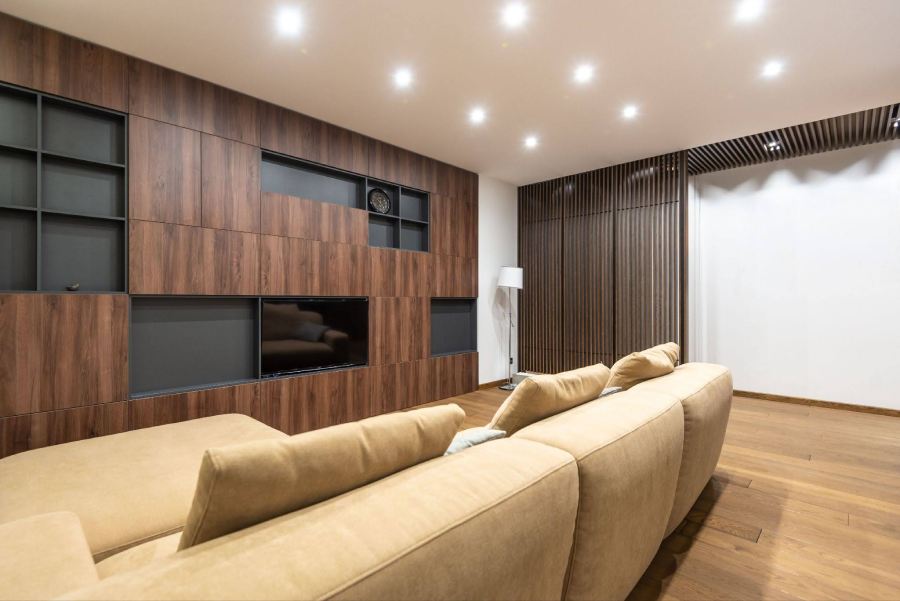
A truly exceptional home cinema is about far more than buying an expensive projector or installing large speakers. With the right luxury home theatre design, an ordinary room can become a carefully engineered entertainment environment where picture quality, sound, comfort, lighting, and technology work together. In this guide, we explore what separates a premium home cinema from a standard media room and the details homeowners should consider before investing.
What Defines a Truly Luxury Home Cinema?
Luxury is often associated with expensive equipment, but price alone does not create a premium cinematic experience. A high-end home cinema is designed around the viewer. Every component, from the position of the screen to the angle of the seats, has a purpose.
A luxury cinema should feel immersive without feeling complicated. You should be able to enter the room, select a movie, dim the lights, adjust the temperature, and begin watching without managing several remotes or navigating complicated menus.
The best installations combine five important elements
- Exceptional picture quality
- Immersive and accurately tuned sound
- Proper room acoustics
- Comfortable, purpose-built seating
- Integrated lighting and smart controls
When these elements are planned together, the result feels less like a television room and more like a private cinema.
Start With the Room, Not the Equipment
One of the most common mistakes homeowners make is choosing equipment before assessing the room. The dimensions, shape, ceiling height, wall construction, windows, doors, and existing electrical infrastructure can all influence the final result.
A professional designer begins by evaluating the space. This helps determine whether a projector or large-format display is more appropriate, where speakers should be positioned, how many seats can comfortably fit, and what acoustic treatment the room requires.
Room Dimensions Matter
The room should provide enough distance between the screen and seating positions. If the screen is too large for the viewing distance, viewers may experience eye fatigue or struggle to take in the entire image comfortably.
Likewise, poor speaker placement can reduce the impact of surround sound, even when the speakers themselves are expensive.
This is why room planning should happen before equipment selection. The technology should be chosen to suit the space rather than forcing the space to accommodate incompatible technology.
The Importance of a Premium Display
The screen is one of the most noticeable parts of any cinema. However, luxury is not simply about selecting the largest screen available.
A premium display should provide strong contrast, accurate colours, excellent detail, and consistent image quality. Depending on the room, homeowners may choose a high-end projector and projection screen or a large-format television.
Projector or Large Display?
A projector can create an authentic cinema atmosphere because it allows for a significantly larger image. It can be particularly effective in a dedicated, light-controlled room.
A premium television, on the other hand, can deliver excellent brightness and contrast while requiring less maintenance and setup.
The right option depends on factors such as room size, ambient light, viewing distance, content preferences, and budget.
Screen Placement Is Critical
Even a high-performance projector can look disappointing if the screen is poorly positioned.
The screen should be placed at a comfortable viewing height, while seating should be arranged to provide suitable viewing angles. A professional installation can also account for projector throw distance, lens shift, screen size, and sightlines.
Immersive Sound Is a Luxury Essential
A home theater sound system setup should be planned around the room rather than simply filling it with as many speakers as possible. Premium audio is about clarity, balance, accurate imaging, and controlled bass.
A properly designed surround sound system can create the sensation that sound is moving around the listener. Dialogue should remain clear, effects should feel precisely positioned, and music should have depth without overwhelming the room.
Speaker Placement Matters
The location of each speaker influences the overall soundstage.
Depending on the cinema configuration, the system may include:
- Left, centre, and right front speakers
- Surround speakers
- Overhead or height speakers
- Dedicated subwoofers
- A compatible AV receiver or processor
- Power amplification where required
The centre channel deserves particular attention because it typically handles much of the dialogue in films. Poor positioning can make conversations sound unnatural or disconnected from the actors on screen.
Bass Requires Special Attention
Low-frequency sound interacts strongly with the room. Certain frequencies can become exaggerated in one seating position while disappearing in another.
Multiple subwoofers, careful positioning, acoustic treatment, and system calibration can help create more even bass throughout the room.
Acoustic Treatment Makes the Difference
A room can contain expensive speakers and still sound average if its acoustics are ignored.
Hard surfaces such as glass, bare walls, tile, and untreated ceilings can cause reflections. These reflections may reduce dialogue clarity and make music or sound effects feel less controlled.
Acoustic treatment helps manage these reflections.
Absorption and Diffusion
Absorption materials can reduce unwanted reflections, while diffusion helps distribute sound more naturally throughout the room.
A professionally designed cinema may use acoustic panels, bass traps, ceiling treatments, fabric walls, and other solutions without making the space look like a recording studio.
This is where engineering and interior design need to work together.
Acoustic Isolation vs Acoustic Treatment
These two concepts are often confused.
Acoustic treatment focuses on how sound behaves inside the room. Acoustic isolation focuses on reducing sound transmission between the cinema and surrounding spaces.
If the cinema is located next to bedrooms, living areas, or neighbours, isolation may be an important consideration. Wall construction, doors, flooring, ceiling assemblies, and ventilation paths can all affect sound transmission.
Luxury Seating Goes Beyond Comfort
Cinema seating is another defining feature of a premium experience.
Luxury recliners can provide adjustable headrests, footrests, lumbar support, armrest storage, USB charging, cup holders, and other conveniences. However, comfort should not be the only consideration.
Seat dimensions and placement influence the viewing experience.
Seating Layout
A well-planned layout ensures that every viewer has a clear view of the screen. The first row should not be positioned too close, while additional rows may need elevation to prevent blocked sightlines.
For larger rooms, tiered platforms can provide better visibility.
The number of seats should also match the available space. Filling a room with too many seats can make it feel cramped and negatively affect both comfort and acoustics.
Lighting That Creates a Cinematic Atmosphere
Lighting is often underestimated in home cinema planning.
A luxury cinema should have multiple lighting zones rather than relying on a single ceiling fixture. Ambient lighting, pathway lighting, step lights, wall lighting, and subtle accent lighting can create different moods.
During a movie, the room should be dark enough to preserve image quality while still providing safe movement around the space.
Smart Lighting Scenes
Automation can make lighting much more convenient.
For example, a single “Movie” scene could
- Dim the main lights.
- Activate pathway lighting.
- Lower motorised blinds.
- Turn on the AV equipment.
- Set the appropriate audio source.
- Start the cinema system.
This removes unnecessary steps and makes the room feel more polished.
Smart Technology and Seamless Control
A luxury cinema should not feel like a technology laboratory.
The goal of automation is to simplify the experience. A central control system can bring entertainment, lighting, shades, climate control, and other compatible systems together.
Users can then create personalised scenes for activities such as:
- Movie night
- Sports viewing
- Gaming
- Music listening
- Family entertainment
- Intermission
Voice control, touch panels, smartphones, and dedicated remotes may all be integrated depending on the system.
The most successful installations hide much of the technology. Equipment can be placed in dedicated racks or concealed cabinetry, while wiring is routed through walls and ceilings wherever practical.
Interior Design and Personalisation
A luxury cinema should also look like it belongs in the home.
Traditional cinema interiors may use dark walls, theatrical curtains, carpet, and illuminated signage. Contemporary spaces may take a more minimalist approach with neutral colours, concealed speakers, acoustic fabric, and sophisticated architectural details.
Personal Themes
Homeowners can personalise the room around a favourite film genre, sports team, classic cinema aesthetic, or completely modern design.
However, decorative elements should not compromise acoustics or viewing quality.
For example, reflective decorative surfaces may create unwanted sound reflections. Bright surfaces can also introduce unwanted light into the viewing environment.
Good design balances personality with performance.
Temperature, Air Quality, and Ventilation
Comfort does not stop at seating.
A cinema can become uncomfortable surprisingly quickly when several people occupy a sealed room. Proper ventilation and temperature control are therefore important, particularly during longer movie sessions.
The HVAC system should ideally operate quietly enough that it does not interfere with dialogue or subtle sound effects.
Equipment also generates heat. Projectors, amplifiers, media servers, gaming systems, and other electronics may require appropriate ventilation.
A well-planned cinema therefore considers airflow and equipment cooling during the design stage instead of treating them as afterthoughts.
Professional Installation Matters
High-end equipment cannot compensate for poor installation.
A professional installation considers the entire system rather than treating each component independently. This includes speaker positioning, calibration, screen alignment, wiring, networking, acoustic treatment, lighting integration, and control systems.
Calibration Is Essential
After installation, audio and video should be calibrated for the room.
Audio calibration can help balance speaker levels, delays, crossover points, and room response. Video calibration can improve colour accuracy, brightness, contrast, and other image characteristics.
The result is a system that performs according to the characteristics of the actual room rather than generic factory settings.
The Role of Future-Proofing
Technology changes quickly. A luxury cinema should therefore be designed with future upgrades in mind.
Accessible equipment racks, adequate cable pathways, sufficient electrical capacity, and network connectivity can make future upgrades easier.
For example, homeowners may eventually want to upgrade the display, add gaming equipment, introduce new streaming hardware, or improve their audio processing system.
Planning for these possibilities from the beginning can reduce future renovation costs.
Pros and Cons of a Luxury Home Cinema
A dedicated cinema can transform the way a family enjoys entertainment, but it is still a significant investment.
Pros
- Highly immersive movie experience
- Superior audio and video performance
- Customised seating and room design
- Better control over lighting and viewing conditions
- Smart automation and simplified operation
- Personalised aesthetics
- Potentially increased appeal and functionality of the home
Cons
- Higher initial investment
- Requires careful room planning
- Professional installation may be necessary
- Equipment and technology can eventually require upgrades
- Dedicated rooms may take up valuable living space
- Poor planning can lead to expensive performance issues
The key is to focus on the experience rather than purchasing individual components simply because they have premium specifications.
How Much Does a Luxury Home Cinema Cost?
There is no single price for a luxury cinema because the investment depends heavily on the room and desired performance.
A smaller cinema with premium equipment may cost significantly less than a fully customised room with architectural modifications, acoustic isolation, bespoke seating, advanced automation, high-end projection, multiple subwoofers, and dedicated equipment racks.
The budget can be influenced by
- Room construction
- Acoustic isolation
- Acoustic treatment
- Display technology
- Speaker system
- Amplification
- Seating
- Lighting
- Automation
- HVAC requirements
- Wiring and networking
- Interior finishes
- Installation and calibration
Instead of allocating the entire budget to audiovisual equipment, homeowners should consider the room as a complete system.
Spending heavily on speakers while ignoring acoustics, for example, may produce a less impressive result than investing in a balanced combination of equipment and room engineering.
FAQ’s
Start with the room dimensions, viewing distance, seating layout, acoustic requirements, display type, speaker positioning, lighting, ventilation, and control requirements. Equipment should be selected after these factors are understood.
Conclusion: Luxury Is About the Complete Experience
A truly luxurious home cinema is not defined by one expensive projector, a large screen, or a powerful speaker system. It is the result of thoughtful planning where technology, acoustics, architecture, comfort, lighting, and automation work together.
The best cinema rooms make sophisticated technology feel effortless. You sit down, the lights adjust, the screen comes alive, the sound surrounds you, and the room simply disappears into the experience.
If you are planning a premium entertainment space, start with the room and the experience you want to create rather than shopping for equipment in isolation. A carefully planned system can deliver better performance, greater comfort, and a cinema experience that remains enjoyable for years.
Ready to turn your entertainment room into a truly immersive cinema experience? Explore AudioSuite’s home cinema solutions and discover how thoughtful planning, premium technology, and professional integration can transform the way you watch, listen, and enjoy entertainment.